The Archaeology of the Paper Map: Why We Hoard Our Tangible Horizons
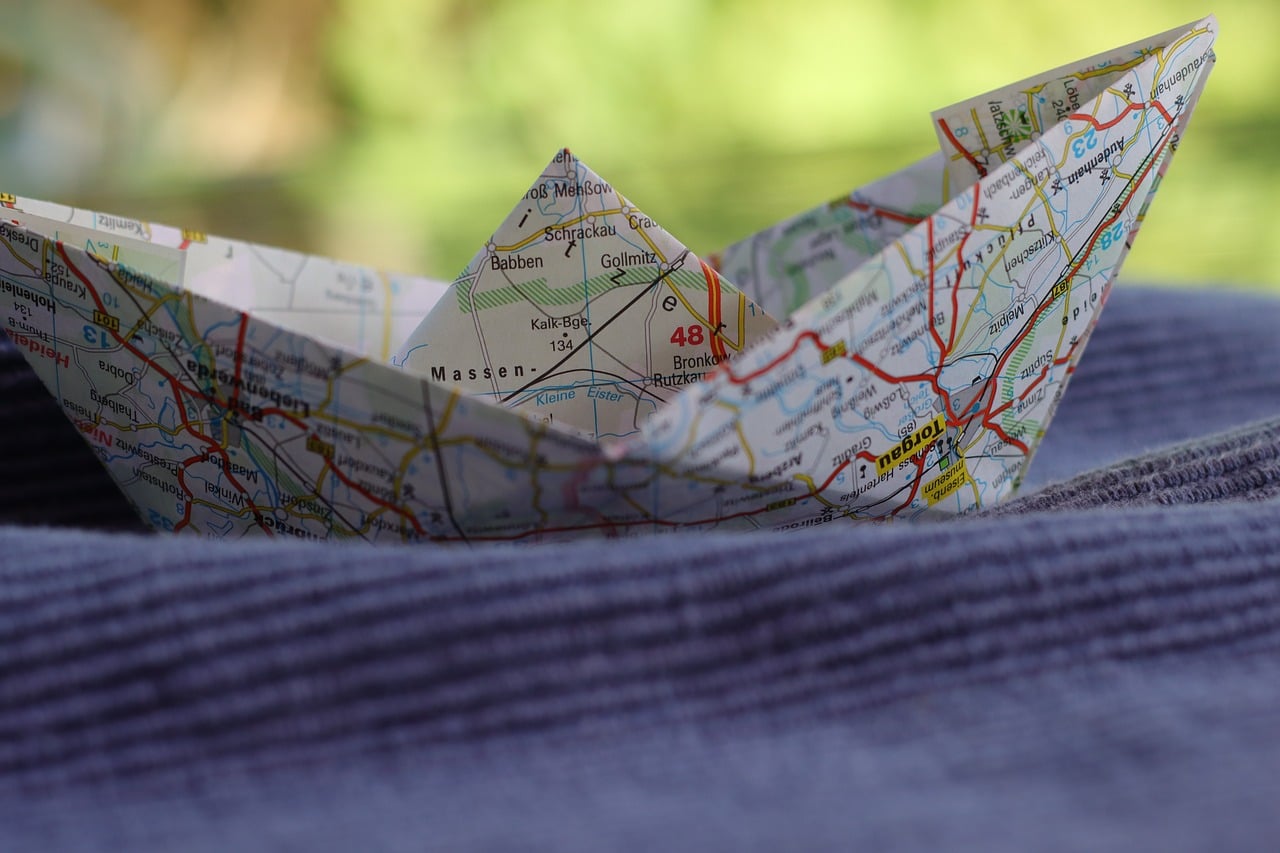
I recently found a crumpled, coffee-stained road map of the Pacific Northwest shoved into the glove box of my sedan. It was from 2012, a time when smartphones were still just beginning to dictate our every turn, and yet, there it sat—a testament to a summer of wrong turns and unplanned detours. Most people would call it trash, a relic of a pre-digital navigation age that belongs in a recycling bin. But I couldn't throw it away. Holding that paper map, I wasn't just looking at a representation of geography; I was touching a record of a specific, tangible horizon.
The Tactile Weight of Distance
Digital navigation is frictionless. You type in a destination, and a disembodied voice guides you through a sanitized, efficient path. There is no sense of the scale of the world, only the next turn instruction. A paper map, conversely, forces you to confront the physical reality of distance. You have to spread it out across a dashboard or a kitchen table, using your fingers to trace the spiderweb of highways.
- Physical maps provide a sense of place that screens cannot replicate.
- They allow for 'accidental discovery' by showing you towns you weren't looking for.
- The act of folding and unfolding is a ritual of preparation and closure.
When you hoard a paper map, you are hoarding the physical sensation of having been somewhere. The creases represent the miles you covered, and the pencil marks—scribbled notes on where to find the best roadside diner—are the footprints of your past self.
The Cartography of Human Error
There is a unique kind of beauty in a map that has been marked up by hand. My 2012 map has a thick, jagged circle around a tiny town in Oregon where we blew a tire. That specific spot on the map, which would be nothing more than a coordinate on a GPS app, is now a permanent marker of a crisis overcome. Maps become diaries of our failures and our improvisations.
The map is not the territory, but it is the most honest biographer of our wanderings. It documents not just where we went, but how we felt while trying to get there.
We keep these maps because they remind us that getting lost was once a feature of travel, not a bug. In the digital age, being lost is seen as a failure of technology. In the era of the paper map, being lost was simply a part of the adventure.
Mapping Our Changing Selves
As we get older, our maps change. The maps I hoard now are different from the ones I collected in my twenties. Back then, they were filled with routes to music festivals and cheap motels. Today, they are cleaner, focused on state parks and scenic byways. By keeping these documents, we are effectively maintaining a longitudinal study of our own evolution.
- The map of youth: Spontaneous, bold, and often poorly planned.
- The map of middle age: Practical, safe, and curated for comfort.
- The map of reflection: A souvenir of places we can no longer reach, or no longer wish to.
The Final Fold
Hoarding paper maps is an act of resistance against the ephemeral nature of digital data. A GPS route disappears the moment you reach your destination. A paper map persists. It waits in your drawer, ready to be unfolded again, ready to remind you that once, long ago, you navigated the world with nothing but your eyes, your intuition, and a very large, slightly confusing piece of paper.
Ultimately, these maps are not about finding our way to a destination; they are about remembering the way we were when we were searching. Don't look at them as outdated tools for navigation. Look at them as the anchors of your own travel history, holding you to the moments when you were truly present in the world.