The Price of a Brotherly Loan
The Betrayal at the Dinner Table
Ten years ago, my brother Arthur stood in my kitchen, his hands trembling as he laid out a plan that sounded like a salvation. He needed my entire savings—every cent I had set aside for a house—to launch his 'revolutionary' venture. He promised a return in six months. We didn't use a lawyer. We didn't use a contract. We were family, and in our house, a handshake was supposed to be stronger than any legal document.
Six months passed, then a year, then five. Every time I brought it up at family gatherings, he would laugh it off, turning the conversation to his new car or his recent vacation. My mother would whisper, 'He’s your brother, don’t be petty.' I watched my own dreams dissolve while he lived comfortably on my sacrifice. It wasn't just the money; it was the way he looked at me, as if my silence were a weakness he was entitled to exploit.
The Years of Quiet Grind
I stopped asking. I stopped hoping. I threw myself into a dead-end job, working double shifts while my brother played the role of a successful entrepreneur. The injustice was a heavy stone I carried in my chest every single day. I saw him at weddings, wearing suits that cost more than my monthly rent, while I sat in the corner, quietly calculating how much longer I would have to work to recover what was stolen.
I began to build something of my own in the dead of night—a small, digital consulting firm that required no physical space, only my exhaustion and my fury. I learned the markets, I learned the law, and I learned that being the 'nice guy' is a losing strategy in a world that thrives on predators. By the time Arthur’s business finally collapsed under the weight of his own incompetence, I was no longer the person he had cheated.
The Tables Turn
The truth is bitter, but it is the only thing that can set you free from the lies of others.
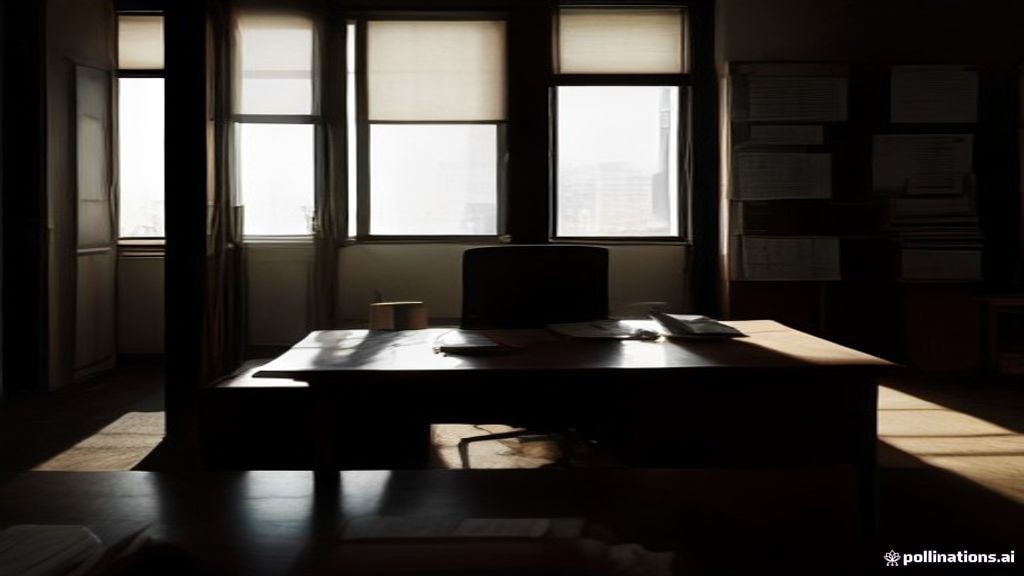
Arthur came to my office unannounced. He didn't look like the confident brother anymore; he looked desperate. 'I need a bridge loan,' he said, his voice devoid of the old arrogance. 'Just enough to get me through the month.' He looked at me, expecting the same old sympathy, expecting the man who would sacrifice everything for the sake of 'family.'
I looked at him and smiled. It was a cold, clean feeling. 'Arthur,' I said, 'you don't owe me a thing, because I wrote that loss off as the price of a lesson. You are a stranger to me now, and strangers don't get loans from me.' His face went pale. He started to plead, but the door was already open. The security guard was waiting. I didn't hate him; I simply didn't care about him anymore.
The Final Word
He walked away, and I returned to my desk, realizing that the money I lost had bought me something far more valuable: a complete lack of expectation. I no longer care about his failures, and I certainly don't care about his success. I had paid the price to be rid of the weight of him. Have you ever realized that the people you owe the most are often the ones who owe you their integrity?