The Fence of Thorns
The encroaching wall
It started with a single row of bricks, placed just three inches onto my side of the gravel path. I remember standing there in my slippers, holding a cold cup of coffee, watching Arthur lay them down. He didn't look up when I approached. He just hummed a tuneless song, his trowel scraping against the stone. When I asked him about the survey lines, he laughed, a dry, raspy sound that made my skin crawl. He told me the land was 'confused' and that he was simply straightening it out for the sake of the neighborhood aesthetic.
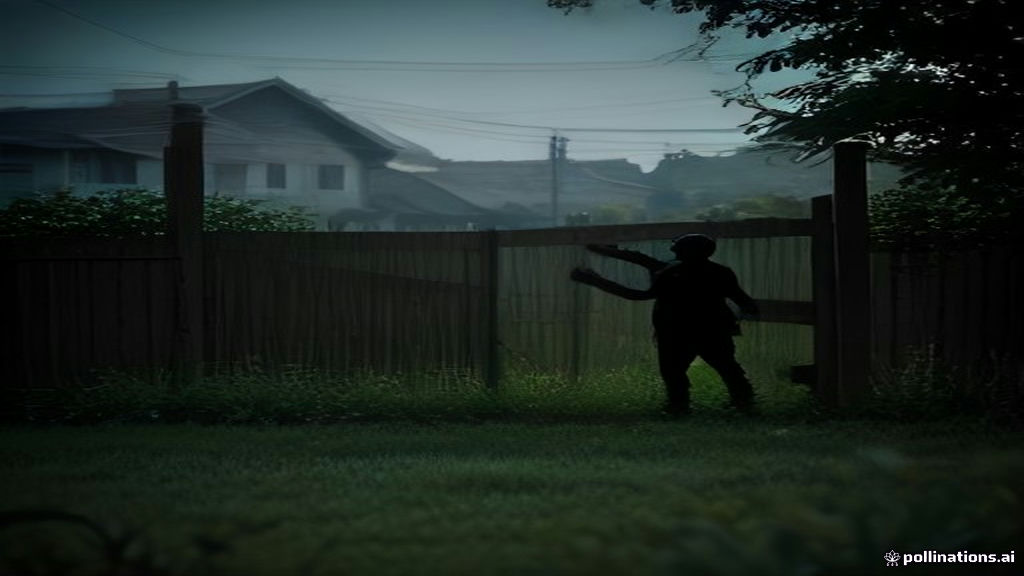
I was the one who had cleared the brambles from that edge for five years. I was the one who paid for the new drainage when the city refused to help. But Arthur, a man who had lived here for twenty years longer than me, decided my effort was an invitation for encroachment. Within a week, the bricks became a wall, and the wall became a fence topped with jagged, rusted wire. He didn't just block my sunlight; he blocked my path to the back garden, forcing me to haul my groceries through the mud of the side alley.
The silence of the jury
I tried to talk to the neighbors. I knocked on doors with documents in hand, showing the town planning maps, the original deeds, the precise measurements. They looked at their shoes. They looked at their hedges. Mrs. Gable, who I had helped bring groceries to during the winter storms, actually shut her door before I finished my first sentence. It was the collective turning away that hurt more than the fence itself. They were terrified of Arthur, a man who spent his afternoons filing complaints with the council about every blade of grass that dared to grow an inch too tall.
The greatest betrayal is not the act of the enemy, but the calculated indifference of the friend who watches it happen.
I felt small. I felt like a trespasser in my own home. I spent nights awake, listening to the wind rattle that rusted wire, thinking about the money I had spent on the landscaping, the years of sweat equity, all erased by a spiteful man with a shovel. I was tempted to tear it down, to call the police, to scream until my throat bled, but something held me back. I decided to stop fighting him on his terms.
The long game
I stopped talking to Arthur entirely. I didn't acknowledge his existence when he sat on his porch, waiting for me to snap. Instead, I focused on my own house. I painted the exterior, I fixed the roof, and I planted a row of thick, fast-growing hedges on my side of the line—far enough back to be legal, but close enough to eventually render his ugly fence invisible. It took two years. I lived in the shadow of that wire, saying nothing, doing nothing but tending to my own patch of earth.
Then, the shift happened. The city announced a new zoning project that required a land audit for the entire block. They weren't looking for minor disputes; they were looking for safety violations and structural integrity. Arthur’s fence, built without a permit and anchored into the city’s drainage pipes, was flagged immediately. The inspectors didn't care about our neighborly feud. They cared about the code.
The tables turn
It was a rainy Tuesday when the heavy machinery arrived. Arthur was frantic, running between the inspectors and his wall, shouting about 'property rights' and 'long-term residents.' Nobody listened. He came to my door, his face pale and his hands shaking, asking me to lie to the inspectors—to tell them the fence had been there for thirty years, to tell them it was an agreement we had made. He looked so small, so desperate, that for a moment, I almost felt sorry for him.
I looked at him, then at the tangled mess of rust and wire that had dominated my life for years. I simply said, 'I think the survey maps speak for themselves, Arthur,' and I closed the door. They tore it down that afternoon. The cost of the demolition, the fines for the drainage damage, and the legal fees for the zoning violation wiped out his savings. Within six months, he put his house on the market, unable to face the block he had tried to bully into submission.
I still live here, in the house with the tall, healthy hedges. I never see Arthur, but sometimes I hear the new owners talking about the 'odd, empty space' where the wall used to be. I don't tell them the story. I just tend to my garden, knowing that some walls don't need to be broken—they just need to be outlasted.