The Compass in the Rain
The Stranger in the Mud
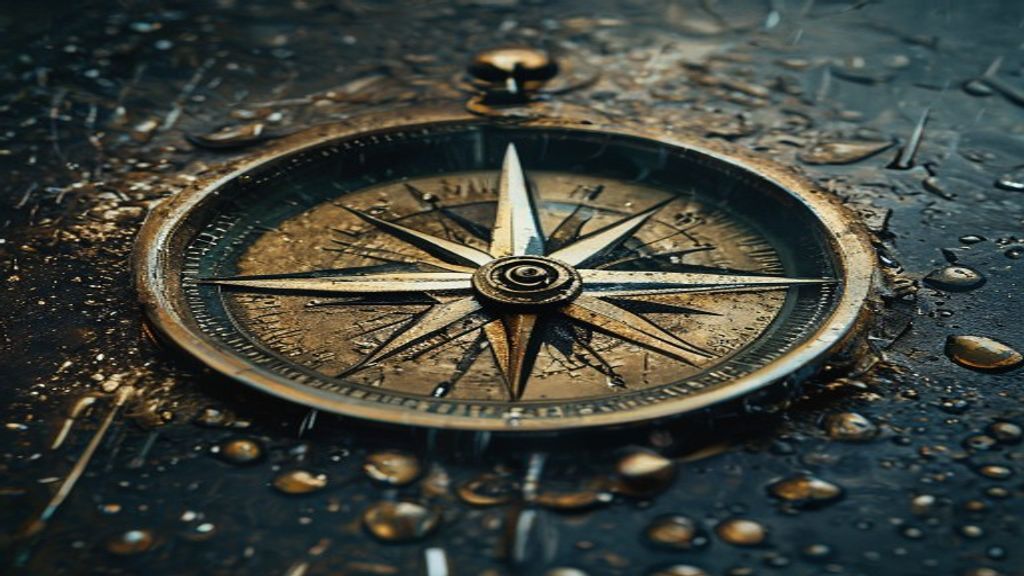
The rain that day felt like a punishment. It had turned our village roads into a treacherous slurry of grey clay and misery. I was walking back from the village store, my coat soaked through, when I saw him sitting by our sagging gate. He was young, trembling with cold, and his eyes held the hollow look of someone who had run out of road. In my pocket, I carried my grandfather’s brass compass—a heavy, cold thing that felt like a burden I no longer needed to carry.
I didn't think about the value of the heirloom. I didn't think about my own empty cupboards. I just saw a human being disintegrating in the storm. I gave him my spare loaf of bread and the compass. I told him, 'This will point you home, just don't ever lose your sense of direction.' He didn't speak. He just looked at me, his eyes wide and wet, and vanished into the grey curtain of rain. My family mocked me for weeks: 'You gave away the only thing of value we had to a ghost,' they said. They didn't understand that some things are only valuable when they are given away.
The Years of Erosion
The decade that followed was a slow erosion of my spirit. My brothers, who had long since left for the city, returned only when the inheritance of our father's house became a matter of legal greed. They cornered me in the kitchen, their voices sharp as glass shards. They told me I had no right to the land, that I was just the caretaker, the one who stayed behind to rot. They filed papers, they brought lawyers, and they stripped away my security until I was left with a single, leaking room.
The cruelty of kin is a unique kind of cold; it settles in the marrow of your bones and stays there, long after the shouting has stopped.
The Unlikely Return
The day the bailiffs were scheduled to arrive, a sleek, black car pulled up to the overgrown driveway. I expected my brothers. Instead, a man in a tailored coat stepped out. He looked older, his face lined with the maps of a thousand miles, but his gaze was steady. He held the brass compass in his palm, the metal polished to a mirror shine. It was the boy from the rain, now a man of significant stature.
He walked through the house, listening to my brothers stammer and grovel, his expression one of polite disdain. He hadn't just come to visit; he had bought the debt my brothers held over me. He offered me a position, a chance to rebuild, and a home that was finally my own. My brothers, seeing the shift in power, tried to offer their 'apologies' and 'reunions.' They were, quite suddenly, very eager to be my family again.
The Final Bearing
I looked at my brothers and then at the compass. I handed the compass back to my guest and turned my back on the people who had tried to erase me. I didn't give my brothers the satisfaction of a fight; I gave them the silence they had earned. The tables hadn't just turned; they had been cleared entirely. When you plant a seed of kindness in the mud, you never know what kind of forest might grow from it, provided you have the patience to survive the winter. Do you still believe that no good deed goes unpunished?