The Harvest of Bitter Honey
The Will of the Soil
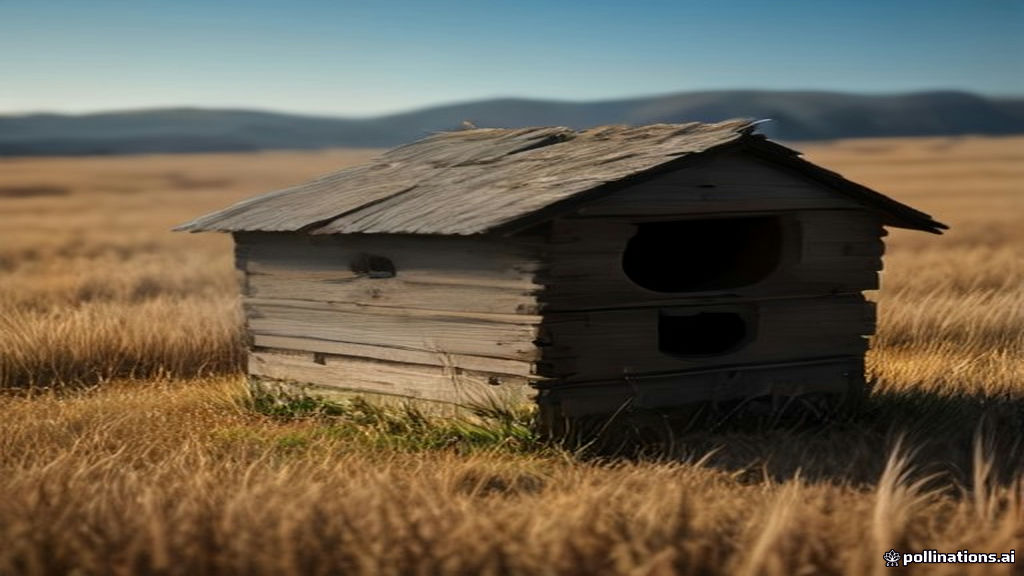
When my father died, the ink on the will was barely dry before my brothers, Elias and Julian, moved to carve up the family orchard. They didn't ask me; they simply informed me. They took the fertile north acres, the ones with the irrigation rights and the established stone-fruit trees. They left me the 'South Parcel'—a patch of rocky, wind-swept scrubland that hadn't turned a profit since the drought of '98. They handed me a stack of tax liens and a crumbling barn, their faces set in masks of practiced sympathy. 'It’s for the best, Clara,' Elias said, not meeting my eyes. 'You’ve always been the one for quiet work. You won't miss the pressure of the harvest quotas.' They didn't care that I had spent the last decade nursing my father through his decline, paying for his medicine with my own savings, while they were busy living in the city, sending postcards instead of checks.
I stayed. I didn't fight them in court because the legal fees would have swallowed what little was left of the land. Instead, I took a shovel and a bag of wildflower seeds. I spent three years clearing rocks, my hands calloused and bleeding, turning that 'worthless' soil into something else. While they grew rows of uniform, pesticide-heavy apples that the markets began to reject for their lack of flavor, I turned to the bees. I learned the language of the hive. I became a beekeeper of the wild, producing honey that tasted of lavender, thyme, and mountain minerals.
The Long Silence
The years passed in a rhythmic cycle of bloom and extraction. My brothers’ enterprise faltered. They had exhausted the soil with industrial farming, and the market turned against their bland, mass-produced fruit. They started calling, first with casual inquiries, then with desperate pleas for loans. I remember the afternoon Julian showed up at my gate. He looked at my vibrant, buzzing hives and my thriving, diverse garden with a mixture of confusion and greed. 'We’re in a bit of a hole, Clara,' he admitted, his expensive shoes stained with the red dust of my driveway. 'We were thinking maybe we could use a portion of your south acreage to expand our storage. You don't really have the capacity to manage all this alone.'
I looked at him—the man who had left me with a debt and a graveyard of dry weeds—and I simply shook my head. 'The bees don't like visitors,' I said. I didn't offer him coffee. I didn't offer him a seat. I watched him leave, his shoulders slumped, and for the first time in my life, the weight of the past didn't feel like a burden. It felt like a foundation. I was no longer the sister who was pushed aside; I was the one who had built a kingdom out of the dust they had discarded.
The Final Yield
The sting of the bee is a small price to pay for the sweetness of the harvest, but the sting of betrayal is a debt that never loses interest.
The end came not with a bang, but with a bankruptcy notice. My brothers lost the north acres to the bank. They arrived on my porch one rainy Tuesday, their belongings packed into the back of a rusted truck. They looked older, defeated, stripped of the arrogance that had defined them for so long. They asked for a place to stay, a corner of the barn, a bit of work. They spoke of 'family loyalty' and 'making amends.' They expected the same sister who had quietly accepted their cruelty years ago.
I opened the gate, but I didn't let them in. I pointed toward the road they had traveled to leave me behind. 'You told me I was the one for quiet work,' I said. 'The work here is very quiet, and there is no room for those who only know how to reap what they didn't sow.' I turned back to my hives, listening to the steady, industrious hum of life that I had fostered while they were busy destroying theirs. They stood in the rain for a long time before the engine sputtered to life and they drove away. The honey I harvested that autumn was the clearest, richest batch I had ever produced. I didn't give a drop to them, and I didn't regret it for a second. When you build your life on the bedrock of your own labor, you learn that you owe nothing to those who only wanted to own the fruit of your struggle.