The Geometry of the Empty Court: Finding Clarity in Stillness
The Art of Emptiness
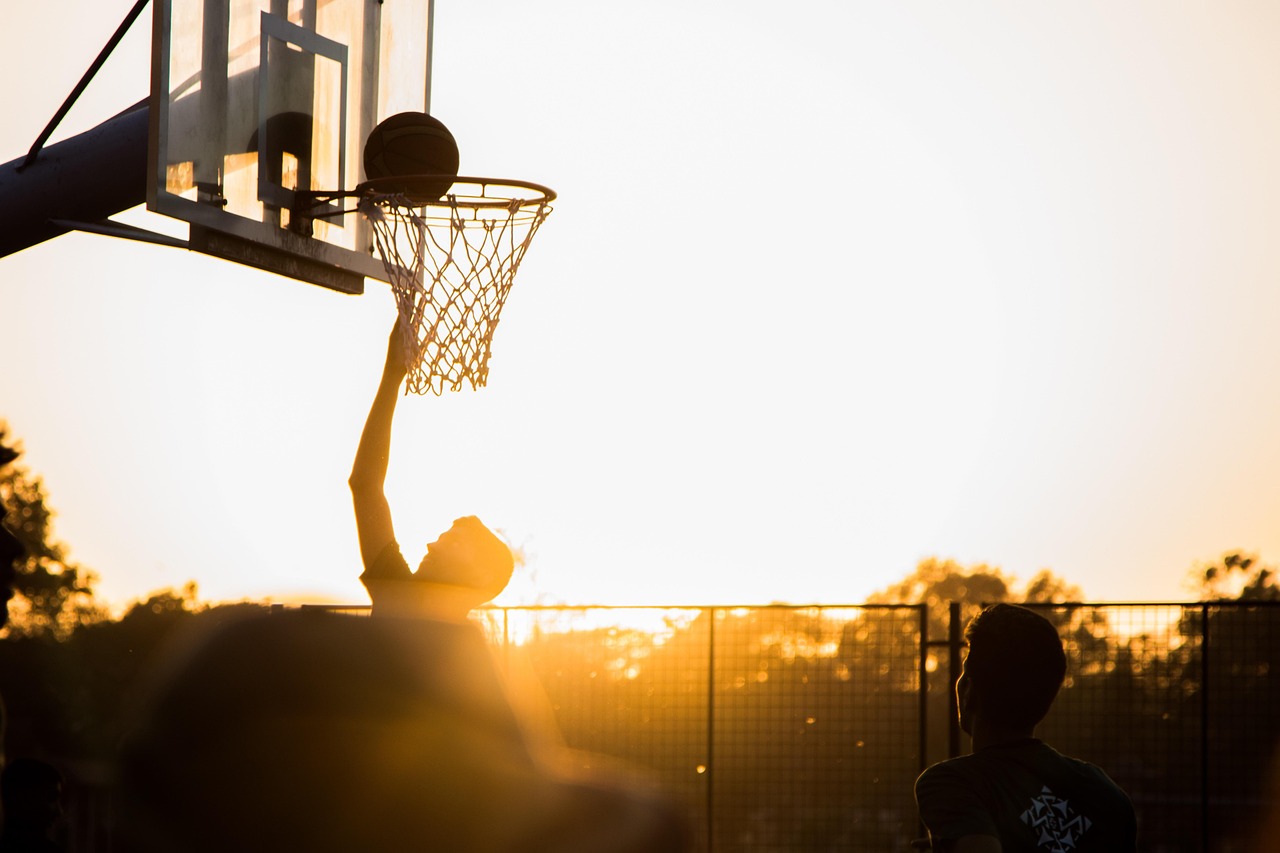
We often equate sports with victory, roar, and the collective energy of a crowd. Yet, if you have ever stood on an empty basketball court at dawn or late at night, you know there is a unique, almost sacred atmosphere there. It is a space where the painted lines, the iron rim, and the concrete floor become more than just game elements; they become tools for organizing the mind.
When the pressure of competition fades, the geometry of the court shifts. The parallel lines become boundaries that contain your restlessness, while the hoop becomes a singular point of focus. This is the side of sport that we rarely discuss, but it is the one that most deeply shapes our character. It is an architecture of intent, where the only judge is your own consistency.
The Meditative Power of Repetition
In an empty court, everything is cyclical. The thud of the ball against the concrete, the swish of the net, and your own steady breathing. This is not training in the traditional sense; it is a rhythm. When we repeat the same motion over and over, our brains enter a state that psychologists call the flow state. The outside world—with its emails, deadlines, and social demands—melts away, leaving only the mechanics of the game.
Solitude on the court is like a blank canvas, upon which you write not words, but the expressions of your own willpower.
In this process, it does not matter how many shots you make. What matters is that you remain present. This simplicity allows us to shed the excess noise that accumulates during our daily lives. Each repetition is a chance to reset, to find grace in a mechanical motion that serves no purpose other than its own perfection.
The Relationship Between Boundaries and Freedom
Interestingly, we often feel most free when we are within clearly defined limits. The lines of the court force us to be precise. That rigid geometry provides a scaffold for our thoughts during chaotic moments in our lives. By adhering to the rules of the court—even when no one is watching—we practice a form of integrity that translates into our professional and personal lives.
- Count your breath before every shot to center your pulse.
- Focus not on the outcome, but on the fluidity of your release.
- Embrace the miss as data collection rather than failure.
Returning to Simplicity
Each of us needs an empty court—whether it is a literal sports field, a park, or simply a quiet room where we can be alone with our thoughts. Here, we learn that not everything needs an audience to be valid. Life is often a race, but it is in the emptiness that we find the foundation required for any true victory. We learn to measure ourselves against our own standards, not the shifting expectations of others.
So, the next time you feel that the world is becoming too loud, find an empty space. Perhaps there, in the silence and the geometric precision of a quiet place, you will find the answers you have been searching for despite all the noise. Remember, the court is always waiting, not to judge you, but to mirror you.