The Last Envelope at St. Jude
The Promise in the Dust
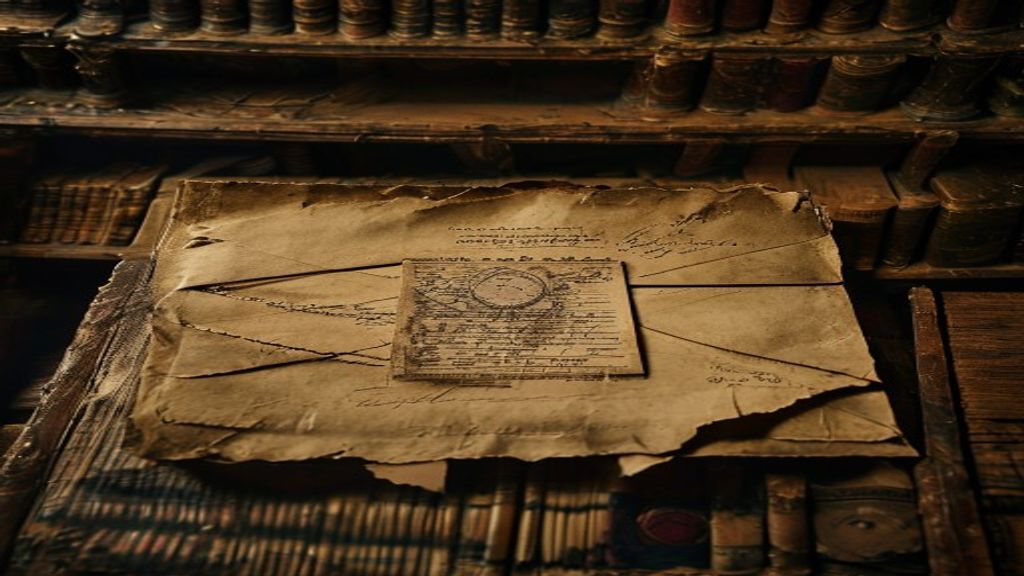
Ten years ago, when my father died, he asked me for one thing: to hold onto an envelope containing the deeds to our family’s struggling farm until my brother, Mark, turned thirty. Mark had always been the golden child, the one who could do no wrong, while I was the quiet one who did the heavy lifting. When Mark demanded the envelope immediately after the funeral, claiming I wasn't 'responsible' enough to hold it, I refused. That was the day my life splintered.
My mother looked at me with cold, detached eyes and said, 'Just give it to him. You never understood the weight of family business anyway.' The betrayal cut deeper than the words. I walked out of that house with nothing but my clothes and that envelope. They accused me of theft, disowned me publicly, and scrubbed my name from their history. I was a ghost in my own family.
The Years of Silence
I moved to a small town and found work in a quiet municipal library. My life became a steady rhythm of cataloging, dust, and solitude. Every few months, Mark would reach out, not to reconcile, but to scream and demand the envelope. He called me a failure, a thief, and a disgrace to our father’s memory. I never replied. I held onto the envelope not because of the land, but because it was the only piece of my father’s trust I had left.
Truth is a heavy stone to carry, but it is the only thing that eventually flattens the lies beneath it.
I spent my nights studying tax law and land management. I discovered the farm wasn't a gold mine; it was drowning in debt. I worked two jobs, saving every cent, not to get rich, but to buy the debt from the banks bit by bit. I spent a decade turning a sinking ship into a sanctuary, fueled by the memory of the man who actually loved me.
The Tables Turn
When Mark’s arrogance finally led him to bankruptcy, he came crawling back. He looked gaunt, desperate, and aged by his own greed. He showed up at the library, convinced that the envelope I still carried was the key to his salvation. 'Give it to me,' he spat, pointing at my desk. 'I know you have it. You’ve been sitting on my inheritance for ten years.'
I pulled the envelope from my drawer. I didn't open it for him. I placed it on the desk and showed him the official title deed—not in his name, but in mine. I had cleared the debts, reclaimed the land, and built a foundation they had abandoned. I looked at him, his mouth agape, and said, 'You wanted this envelope when it was empty and promised nothing. Now that it is full, you are not entitled to a single grain of dirt.' He had nothing to say. He looked away, just as he had done ten years ago.
I returned to the farm, not as a servant, but as the owner. Sometimes, the people who push you out of your own life are the ones who end up standing on the outside looking in. Is it really justice if you don't feel a flicker of satisfaction when the scale finally balances?