The Silent Quest: Astrobiology and the Search for Life Beyond Earth
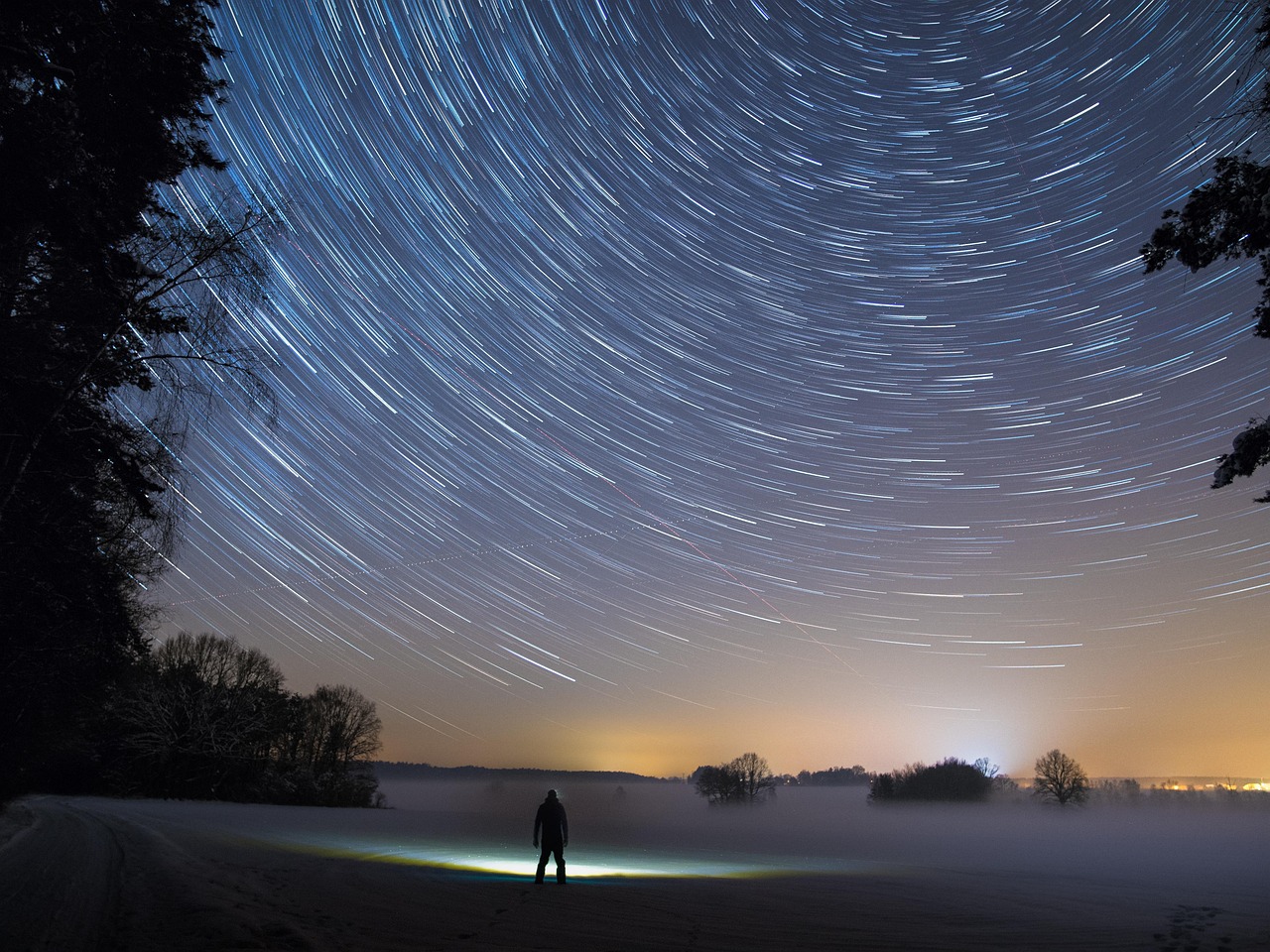
Remember those childhood nights spent gazing up at the stars? For me, it wasn't just about wishing on a distant twinkle; it was about a profound, almost primal curiosity: Are we alone? That question, once relegated to science fiction novels and whispered playground theories, is now at the forefront of a fascinating, rigorous scientific discipline: astrobiology. It's the ultimate cosmic detective story, and we're all, in a way, part of the investigation.
With our heads tilted upwards, eyes fixed on the endless expanse of the cosmos, humans have questioned our place in it since time immemorial. Is our blue planet a unique anomaly for life, or does the universe teem with countless other forms of existence? This is the core driving force behind astrobiology – an interdisciplinary field that merges astronomy, biology, geology, chemistry, and physics to understand the origin, evolution, distribution, and future of life in the universe.
Beyond Little Green Men: What is Astrobiology, Really?
When we talk about alien life, our minds often jump to Hollywood portrayals: highly advanced civilizations or extraterrestrial creatures maneuvering flying saucers. However, the reality of astrobiology is far more grounded in science. It's not primarily searching for 'little green men.' Instead, it's looking for the fundamental evidence of life, be it microbial, plant-based, or simple multicellular organisms. We start from the basics: understanding what life needs to originate and persist, and then we seek those conditions beyond Earth.
Astrobiology explores how life begins and how it manages to survive in the harshest environments. It uses our own planet as a model, studying extremophiles – organisms that thrive in Earth's most inhospitable places, like hydrothermal vents, acidic lakes, or even radioactive waste. These extremophiles teach us that life is far more resilient and adaptable than we might assume, significantly increasing the probability of life existing beyond Earth.
The Cosmic Recipe: Ingredients for Life
For life as we know it on Earth, several key ingredients are essential. These are precisely what astrobiologists look for among the stars. The most crucial component is liquid water; it's the solvent in which chemical reactions can occur. Without it, life as we understand it is impossible. Next is an energy source, which could be sunlight, chemical reactions, or geothermal energy. Finally, organic molecules are needed – carbon-based 'building blocks' to create complex structures.
“If we are alone in the universe, it sure seems like an awful waste of space,” Dr. Jill Tarter, a pioneer in the SETI field, once remarked. While her focus was on intelligent life, the sentiment beautifully encapsulates the driving force behind astrobiology: the profound hope and logical inclination that life, in some form, must exist beyond our blue marble.
With these ingredients in mind, scientists meticulously scan the cosmos for signs of this 'recipe for life.' They look for what are called 'Goldilocks Zones' – regions around stars where the temperature is just right to maintain liquid water, neither too hot nor too cold on a planet or moon's surface.
Our Cosmic Neighborhood Watch: Where We're Looking
So, where are these potentially life-bearing worlds hidden? Within our own Solar System, there are several tantalizing candidates:
- Mars: The Red Planet is Earth's closest neighbor and has long captivated our imagination. Evidence suggests Mars once harbored liquid water – lakes, rivers, and possibly even oceans. Today, we know water still exists as ice at the poles and potentially underground. Rovers like Perseverance and Curiosity are exploring Mars' ancient environments, seeking signs of past life.
- Europa and Enceladus: Jupiter's moon Europa and Saturn's moon Enceladus are among the most exciting places to search for life beyond Earth. Both possess vast subsurface oceans hidden beneath icy shells. Europa is thought to have more water than all of Earth's oceans combined. These oceans are believed to be heated by tidal forces, creating hydrothermal vents similar to those found on Earth where life thrives without sunlight. We've even observed plumes of water erupting from Enceladus into space.
- Exoplanets: Thousands of exoplanets have been discovered outside our Solar System, and that number continues to grow. Some are located within their stars' 'Goldilocks Zones.' The James Webb Space Telescope (JWST) can now analyze the atmospheres of exoplanets, searching for biosignatures – gases like oxygen, methane, or ozone that could be the product of biological processes.
The Tools of the Trade: Hunting for Biosignatures
This cosmic quest is made possible by the incredible tools of modern science. We can't simply fly there and grab samples as easily as we'd like, so we must remotely search for signs of life.
- Spectroscopy: This is a powerful technique that allows scientists to analyze the light passing through an exoplanet's atmosphere. Each chemical element or molecule has a unique 'fingerprint' in light, absorbing or emitting specific wavelengths. Detecting oxygen, methane, or water vapor could indicate the potential presence of life. The JWST is revolutionizing this field with its unprecedented sensitivity.
- Direct Imaging and Space Probes: While challenging, scientists are developing methods to directly image exoplanets and potentially reveal surface features or atmospheric composition. Within the Solar System, probes like Cassini (at Saturn) and the upcoming Europa Clipper (at Jupiter) are taking samples or gathering data about planets and moons, looking for evidence of life.
- SETI (Search for Extraterrestrial Intelligence): While part of the broader field of astrobiology, SETI specifically looks for signs of intelligent life by listening for radio signals or laser pulses. This is a search for 'technosignatures' – evidence of a technological civilization.
The Profound Echo: What Finding Life Would Mean
The discovery of life beyond Earth would be one of humanity's most profound discoveries, shaking our worldview to its very foundations. Even if it were simple microbial life beneath Mars or in an exoplanet's atmosphere, the implications would be immense.
- Our Place in the Universe: We would no longer be alone. It would alter our perception of our uniqueness, revealing that life might be a cosmic phenomenon, not a singular accident of Earth.
- Scientific and Philosophical Revolution: It would revolutionize biology, unveiling new principles of life and evolutionary pathways. Philosophically, it would compel us to re-evaluate our beliefs, our religious understandings, and our ethical frameworks.
- A Unifying Force: The discovery of life beyond Earth could serve as a unifying force for humanity, shifting our focus from the minor differences among us to the vast mystery of the cosmos.
The search for life beyond Earth is more than just a scientific endeavor; it's a journey into understanding ourselves, our planet, and our place in the grand cosmic tapestry. Whether we find microbial traces on Mars or a faint chemical signature in a distant exoplanet's atmosphere, each discovery reshapes our worldview. It reminds us of the incredible resilience of life and the boundless possibilities of the universe, urging us to keep looking up, keep questioning, and keep exploring. The greatest discovery might just be around the next cosmic corner.