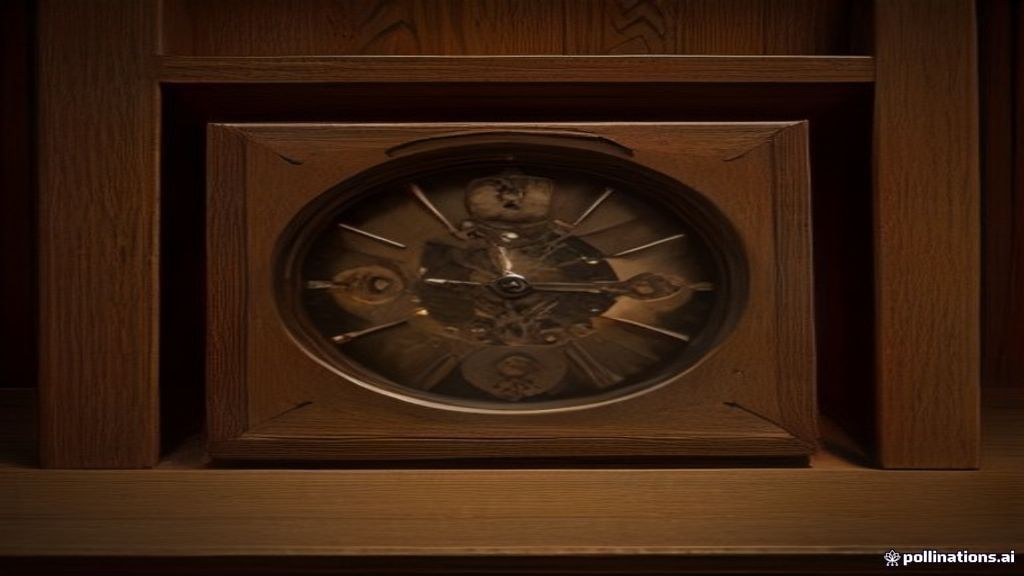
The Clockmaker and the Empty Frame
An Inheritance of Dust
My father died on a rainy Wednesday, the kind of day where the sky hangs low and gray like a heavy wool blanket. Three days after the funeral, my brother, Elias, stood in the living room of our family home and pointed toward the door. He told me the house was being sold and that my father's collection—crates of rusted, silent clocks—was to be tossed into the landfill. I received nothing else. He kept the cash, the jewelry, even the china my mother had spent decades collecting. He looked at me with a smirk that felt like a slap. "You were always the sentimental one, brother. Life isn't measured in ticking seconds, it's measured in real estate."
I didn't argue. I rented a small van and hauled the crates to my cramped studio on the edge of town. For weeks, I sat in the dark, surrounded by the smell of ozone and old metal. Elias mocked me whenever our paths crossed in the village. He told everyone I was a fool for clinging to my father's "junk." I kept my mouth shut. To me, those clocks were the only connection left to a man who had spent his life meticulously repairing what others were too impatient to understand.
The Secret in the Mainspring
I started working on them, one by one. It was a slow, meditative process. Months later, while disassembling an 18th-century English mantle clock, I noticed something odd about the base. It was heavier than it should have been. I pried open a hidden compartment in the wooden frame and found a small, yellowed slip of paper in my father's handwriting: "The true value is not in the frame, but in the foundation it protects."
- The collection contained a specific clock that had never ticked in my lifetime.
- Hidden inside the mainspring housing was a gold-stamped deed.
- The deed proved that the land the house sat on belonged to an ancient trust, not to the estate itself.
It dawned on me that my father knew exactly what he was doing. He knew Elias would never bother to look inside the clocks, and he knew I would eventually try to fix them. The gold-stamped document was a key to a legacy that bypassed my brother entirely. It wasn't just about the money; it was about the legal ownership of the very ground Elias was so eager to sell.
The Tables Turn
Two years later, Elias had lost it all. His reckless investments had crumbled, and he found himself drowning in debt. He showed up at my workshop one morning, looking disheveled and desperate. He didn't know that I had leveraged the trust to reclaim the family home. He thought I was still just a struggling clockmaker. "Brother, I need money," he said, refusing to meet my eyes. "Just enough to cover my debts. You owe me for the past years."
"Time doesn't wait for anyone, Elias," I said, setting down my tools. "But it always brings back exactly what belongs to us."
I laid the legal documents on the workbench. His face drained of color as he realized that the house he had sold—the house he had kicked me out of—wasn't his to sell in the first place. I didn't offer him a dime, but I didn't throw him out into the rain, either. I simply let him walk away into the quiet realization of his own greed. Sometimes the things we discard as worthless are the very things that hold our future together. Would you have the patience to fix what others broke, or would you throw it all away?