The Geometry of the Empty Court: Finding Clarity in Stillness
There is a silent, profound beauty in an empty sports arena that teaches us more about the game than the loudest championship final ever could.
The Solemnity of Silence
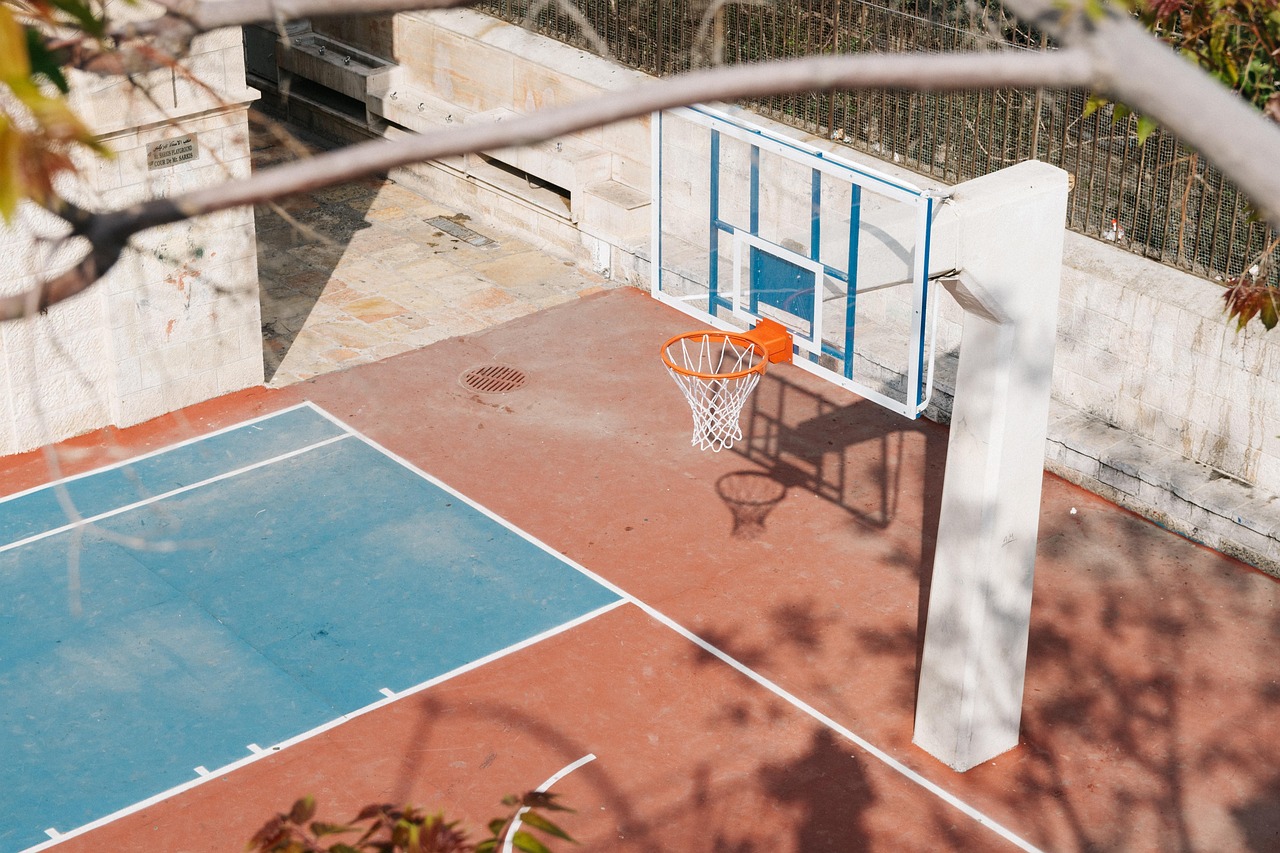
We are conditioned to view sports as a cacophony—a vibrant, high-stakes collision of bodies, sounds, and cheering crowds. Yet, there is a distinct, almost sacred feeling when you step into an empty gymnasium or a deserted basketball court. In the absence of the roar, the space transforms. Where passion usually dictates the flow, a sudden stillness emerges, allowing us to perceive the pure, underlying geometry of the game.
Without players, the painted lines on the floor take on a new life. They cease to be mere boundaries and become conceptual art. This emptiness serves as a reminder that sports are not just about physical exertion; they are a mental architecture, a way of imposing order on the chaotic impulses of human movement.
The Philosophy of Lines
Every court carries its own unique cartography. The three-point arc, the service box, the center circle—these are manifestations of the human mind attempting to codify excellence. When the court is empty, we begin to appreciate the perfection of this structure. It is a testament to our desire to create spaces where fairness is not just an ideal, but a literal, drawn-out reality.
The sports court is perhaps the only place on earth where human ambition is perfectly contained within a set of geometric constraints.
This geometry teaches us that everything has its place. We often seek this kind of order in our daily lives—a sense of knowing exactly where we stand and where the boundaries lie—but we rarely find it as clearly defined as it is on a hardwood floor or a freshly lined track.
The Game of the Mind
Standing on an empty court, we engage in a different kind of play: the play of imagination. We project past victories and future possibilities onto the space. It is a mental sport, where the absence of a ball does not equate to the absence of a game. In the quiet, we visualize the arcs, the sprints, and the tactical decisions that define our personal growth.
- Silence creates the space for genuine focus.
- Emptiness removes the pressure of the performance.
- Geometry provides the map for our internal navigation.
We often forget that the most significant training occurs not under the watchful eyes of coaches or the scrutiny of fans, but in the quiet, solitary moments when we test our own limits against the architecture of the court.
Why We Return
We return to empty courts to remember why we started playing in the first place. It is a rendezvous with our inner child, a space where expectation is stripped away, leaving only the raw potential of the athlete. Here, there are no spectators, no scripts, and no demands—only the floor and you.
This experience reinforces the lesson that the most important aspects of our lives often happen without fanfare. Emptiness is not an enemy to be feared; it is a canvas upon which we project our own narrative. It is the pause between breaths that makes the next movement possible.
The next time you walk past an empty court, stop for a moment. Look at the lines and the way they intersect. Feel the power hidden in the silence. It is not just a place for games; it is a mirror reflecting your own potential, waiting for the moment you decide to step in and play your part.