The Curious Comfort of Analog Analogies: Why We Crave Tangible Thinking
The Discomfort of the Digital Stream
We live in an age where everything is becoming intangible. Our ideas are stored in cloud services, our conversations hidden behind screens, and our workflows buried under an avalanche of notifications. This leads to a pervasive state of 'mental fog.' When thoughts lack a physical form, they become fluid, slippery, and ultimately elusive. We are constantly processing, but are we truly thinking?
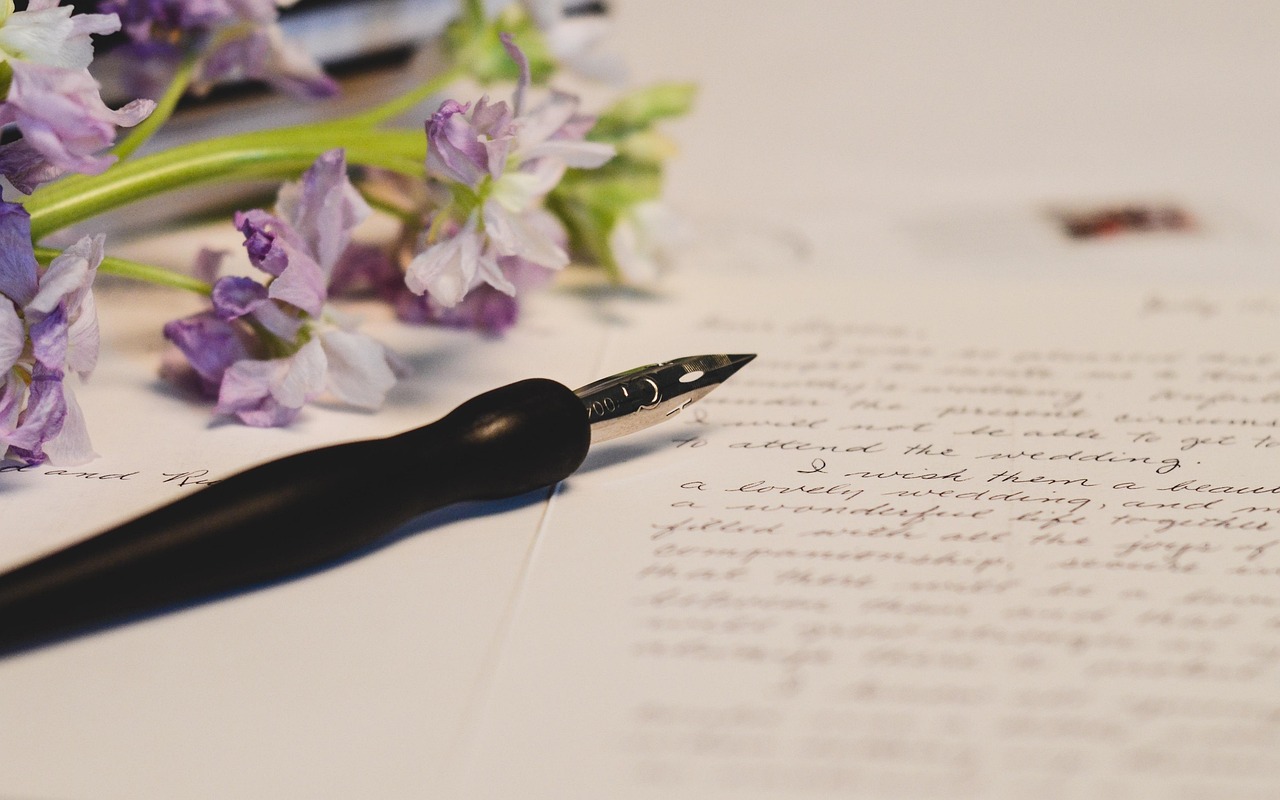
Recently, I decided to conduct an experiment: to abandon digital note-taking apps and return to the archaic beauty of paper and pen. The result was startling. Ideas that felt 'complete' on a high-resolution screen suddenly revealed their structural flaws when committed to the permanence of ink. This isn't just nostalgia; it is a neurobiological necessity. To think deeply, we need resistance, and paper provides exactly that kind of friction.
The Power of Physical Resistance
When you swipe a finger across a screen, you feel nothing. There is no texture, no sound, no consequence. But when a pen scratches against paper, the brain receives rich sensory feedback. This physicality helps us 'capture' thoughts that would otherwise vanish into the digital void. Thinking requires space, and analog tools force us to treat that space as a physical reality. You cannot simply scroll away your mistakes on a physical sheet of paper.
Thinking is not merely processing information; it is the act of constructing a reality. Physical objects, with their inherent limitations, force us to distill complexity into clarity.
The Return of Hierarchy
In digital systems, everything is flattened; a notification from a social media app carries the same visual weight as a critical work deadline. In the analog world, we are forced to build a hierarchy. You cannot infinitely expand your notebook without creating a physical mess, which naturally teaches us to prioritize. We are forced to curate our thoughts before we commit them to the page.
- Prioritize tasks in a paper planner to see the physical limits of your day.
- Map out complex ideas on large sheets of butcher paper to visualize connections.
- Use physical markers or highlighters to categorize information by importance.
The Biology of Memory
Cognitive research consistently shows that handwriting activates different parts of the brain compared to typing. When we type, we are often just transcribing information, acting as a human keyboard. When we write by hand, we are processing, synthesizing, and encoding. This is the secret of the 'analog' advantage: it forces us to be active participants in our own cognitive processes rather than passive conduits for data.
The next time you feel your thoughts becoming tangled in a digital web, don't look for a new app or a faster processor. Step away from the screen. Grab a single sheet of paper and a simple pen. Let the paper become the mirror for your mind. You will find that by engaging your physical senses, you reclaim the clarity that the digital world tries so hard to steal from you. The takeaway is simple: to think more clearly, make your thinking visible.