The Archaeology of the Broken Ceramic Mug: Why We Hoard Our Shattered Comforts
It sits at the very back of the kitchen cabinet, tucked behind the pristine glassware and the trendy travel tumblers. It is a ceramic mug, perhaps slightly chipped at the rim, or worse, held together by a jagged, spiderweb-like scar of epoxy. By all logical metrics, it belongs in the bin. It no longer holds heat efficiently, it is a liability for leaks, and it takes up precious shelf space. Yet, when you go to discard it, a strange sense of hesitation washes over you. You aren't just holding a piece of fired clay; you are holding a physical vessel of a memory.
The Anatomy of an Attachment
Our relationship with domestic objects is rarely purely utilitarian. A mug is more than a container for coffee or tea; it is a tactile anchor to a specific version of ourselves. We hoard these broken vessels because they serve as external hard drives for our personal histories. That crack in the handle? That happened the morning you received the news of your first job offer, when your hands were shaking with nervous energy. The faded decal on the side? That represents a trip to a coastal town you haven't visited in a decade, a place where the air felt different and life felt simpler.
Psychologically, we treat these objects as extensions of our own identity. When an object breaks, we feel a strange urge to mend it rather than replace it, mirroring our own desire to fix the fractured parts of our lives. It is an act of defiance against the disposable nature of modern society. By keeping the broken mug, we are signaling that the history attached to it is still valuable, even if its utility is gone.
The Kintsugi Philosophy of the Mind
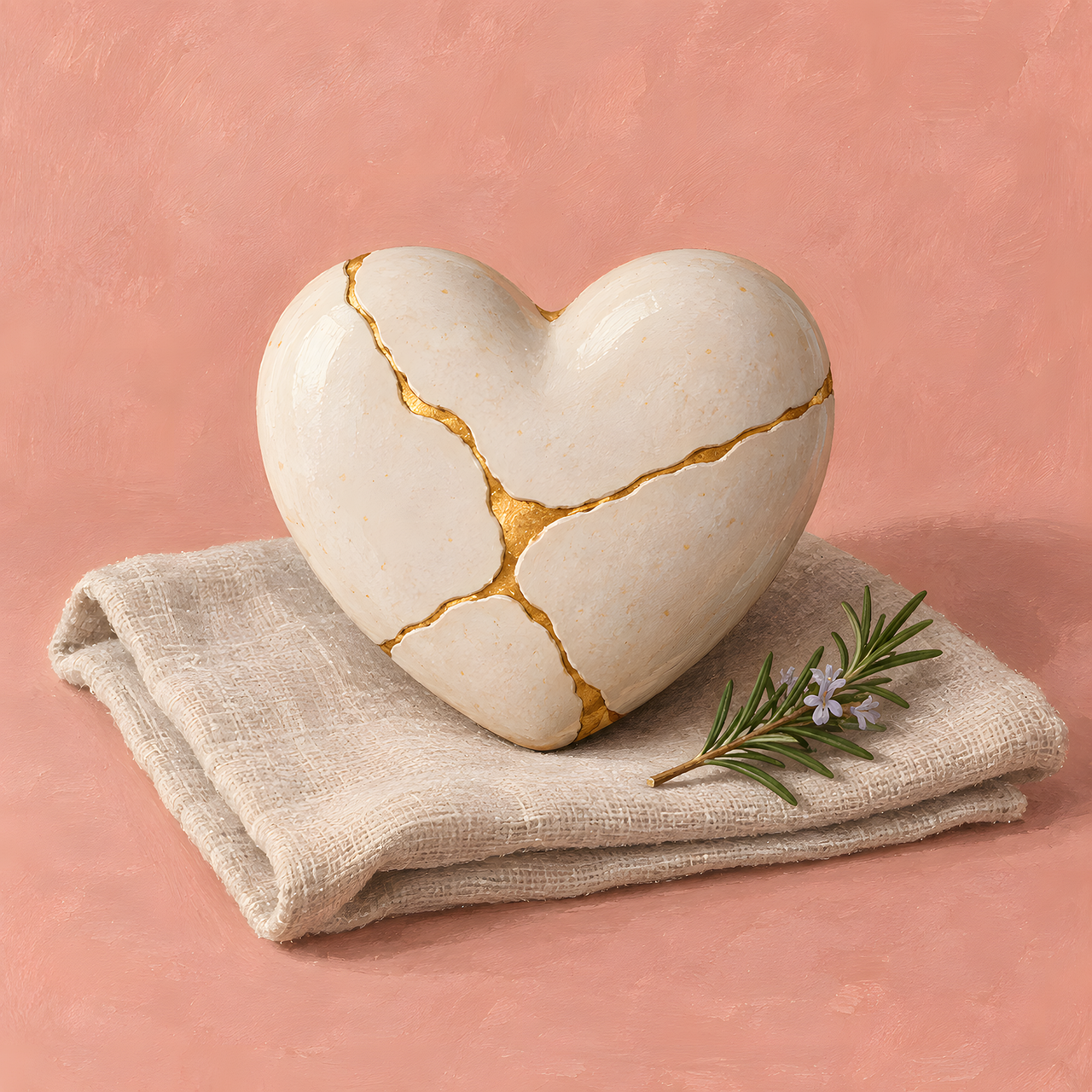
There is a profound beauty in this hoarding behavior, even if it manifests as clutter. The Japanese art of kintsugi—repairing broken pottery with gold lacquer—teaches us that an object's history is part of its beauty. When we hoard our broken mugs, we are practicing a subconscious form of kintsugi. We acknowledge that the break occurred, but we refuse to see it as the end of the object's story. We keep the remnants of our morning routines because they remind us that we have survived previous heartbreaks and minor catastrophes.
The objects we keep are the silent witnesses to our most private evolutions. They do not judge our failures, nor do they demand we be perfect; they simply exist as proof of our persistence.
Why We Fear the Clean-Out
The act of throwing away a broken object feels like erasing a chapter of a biography. We worry that if we discard the vessel, the memory attached to it will evaporate. This is a common cognitive trap: the confusion of the item with the internal narrative. We fear that a tidy kitchen is a sign of a vacant past. However, clinging to too many broken items can eventually stifle our present, turning a home into a museum of 'what-used-to-be' rather than a space for 'what-is-becoming.'
Navigating the Threshold of Utility
If you find your cupboard overflowing with shards and cracks, it might be time for a ritual of release. You don't have to throw everything away, but you should curate your collection. Ask yourself:
- Does this object still spark a vivid memory, or is it just a habit of clutter?
- Can I document the memory in a photo or a journal instead of keeping the physical artifact?
- Am I honoring the memory by letting it live in my daily life, or am I hiding it away in the dark?
The takeaway is simple: your history is not stored in the ceramic; it is stored in your brain. You are the vessel that carries the memories, not the cupboard. By choosing to let go of the broken mug, you aren't discarding the memory—you are making room for the next cup of coffee, the next morning, and the next version of yourself to begin again with a clean, sturdy rim.